Skip to content
Help for learning disabilities
Home
Products & Services
Success Stories
Resources
Dyslexia
Dyscalculia
Cognitive Skills
Reading and Learning Research
Edublox Explained
Edublox Research
Top Success Stories
All Articles
About
About Us
Contact Us
Contact us
Home
Products & Services
Success Stories
Resources
Dyslexia
Dyscalculia
Cognitive Skills
Reading and Learning Research
Edublox Explained
Edublox Research
Top Success Stories
All Articles
About
About Us
Contact Us
Contact us
Sign In
Free Consultation
Register
LD Articles, Resources and Success Stories
Search
Filter by category
Dyscalculia and Math Difficulties
All
Attention Deficits and ADHD
Cognitive Skills and Study Methods
Dyscalculia and Math Difficulties
Dysgraphia and Writing Problems
Dyslexia and Reading Difficulties
Edublox in the Press and Edublox News
Edublox Research
IQ, Intelligence and Brain Power
Kids' Health
Language Development and Language Learning
Overcoming Learning Barriers: Ask Sue for Help
Overcoming Learning Barriers: Top Success Stories
Parenting, Home and Family
Reading and Learning Research
Teaching Resources
Uncategorized
Uncategorized
Unusual and Amazing
What's on for Breakfast, Lunch and Supper?
1
2
3
4
Dyscalculia and Math Difficulties
Understanding Math Today, Forgetting It Tomorrow
Why do some children understand math one day but forget it the next? Discover how memory and cognitive skills shape mathematical learning.
Read more...
Dyscalculia and Math Difficulties
Number Sense: A Key to Mathematical Success
Number sense is one of the foundations of mathematical success. It enables children to understand quantities, compare numbers, estimate, and solve problems with confidence. This article explains what number sense is, why it matters, and how weaknesses in this essential skill can affect learning and achievement in mathematics.
Read more...
Dyscalculia and Math Difficulties
The 5 Main Types of Learning Disabilities
Learning disabilities are more than academic struggles. They are neurologically based difficulties that can affect reading, writing, mathematics, language, and reasoning. This article explores the five main types of learning disabilities—dyslexia, dysgraphia, dyscalculia, developmental language disorder, and nonverbal learning disability.
Read more...
Dyscalculia and Math Difficulties
13 Dyscalculia Success Stories from Real Families
Most dyscalculia success stories in the press are about celebrities who succeeded despite their struggles. These 13 stories are different. They come from ordinary families whose children overcame the daily challenges of dyscalculia with the right support — and found new confidence along the way.
Read more...
Dyscalculia and Math Difficulties
Dyscalculia Hub: Symptoms, Causes, Treatment & Support
The Dyscalculia Hub brings together everything you need to know about math learning disabilities. From causes and symptoms to treatment, overlaps, research, and real-life stories, this collection offers parents and teachers clear guidance — and hope.
Read more...
Dyscalculia and Math Difficulties
Dyscalculia Therapy & Intervention: The 2 Missing Pieces
Why do many dyscalculic students fail to improve with traditional tutoring alone? This article explores the two missing pieces in dyscalculia therapy and intervention: cognitive readiness and viable learning principles.
Read more...
Dyscalculia and Math Difficulties
Defining Dyscalculia: Beyond “Being Bad at Math”
Dyscalculia is often misunderstood as simply being “bad at math,” but the reality is far more complex. This article explores how psychologists, researchers, and educators define dyscalculia, examines the core difficulties involved, and explains why understanding the condition properly matters for effective intervention and support.
Read more...
Dyscalculia and Math Difficulties
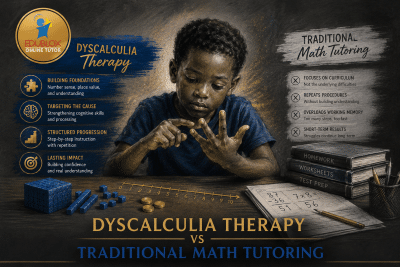
Dyscalculia Therapy vs Traditional Math Tutoring
Many children with dyscalculia continue struggling despite years of traditional math tutoring. This article explains why ordinary tutoring often fails dyscalculic learners and explores the role of structured intervention, cognitive training, place value, sequencing, and foundational math skills in effective dyscalculia therapy.
Read more...
Dyscalculia and Math Difficulties
Dyscalculia Case Study: From Struggle to Success
This dyscalculia case study follows the journey of a 10-year-old student from Hungary who struggled with backward counting, place value, procedural mathematics, and long division. Through ongoing online intervention at Edublox Online Tutor, she steadily developed stronger mathematical understanding, procedural fluency, and confidence.
Read more...
Dyscalculia and Math Difficulties
Dyscalculia Case Study: Sam’s Remarkable Progress in Math
This dyscalculia case study follows the journey of an 11-year-old student who struggled with foundational math concepts and procedures, including place value and long division. After 150 online math lessons and cognitive training through Edublox Online Tutor, he achieved remarkable progress in mathematical understanding, confidence, and fluency.
Read more...
Dyscalculia and Math Difficulties
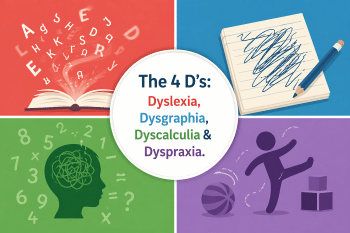
The 4 D’s: Dyslexia, Dysgraphia, Dyscalculia & Dyspraxia
The 4 D’s—dyslexia, dysgraphia, dyscalculia, and dyspraxia—often occur together. Learn how they affect learning and what helps.
Read more...
Dyscalculia and Math Difficulties
Dyscalculia Explained: Signs, Causes, Diagnosis, Support Strategies
Dyscalculia is a math-based learning difficulty that affects number sense, calculation, and problem-solving. This guide covers symptoms, causes, how it’s diagnosed, and what parents, teachers, and adults can do to help.
Read more...
1
2
3
4
Contact Us
We use cookies to ensure that we give you the best experience on our website. If you continue to use this site we will assume that you are happy with it.
Ok
Privacy policy